Snapshot of the New Tax Law

Snapshot of the New Tax Law

After months of discussion and negotiation, comprehensive tax legislation commonly known as the Tax Cuts and Jobs Act (“the Act”) was signed into law by President Donald Trump on December 22, 2017. In general, its provisions, which encompass more than 500 pages, became effective January 1, 2018. However, careful attention should be paid to each provision’s effective date and expiration date. Some provisions are permanent, while others will expire.

How Zagmout & Company CPAs Can Help

Zagmout & Company CPAs helps individuals and business owners evaluate how changes in federal tax law affect their filings, withholding, estimated payments, business structure, and forward-looking tax plans.

SCHEDULE YOUR FREE CONSULTATION

Disclaimer: This article is for general informational purposes only and does not constitute accounting, tax, legal, financial, or investment advice. The application of these matters depends on individual circumstances and should be evaluated with qualified professional advisers.

Scam Phone Calls Continue; IRS Identifies Five Easy Ways to Spot

Scam Phone Calls Continue; IRS Identifies Five Easy Ways to Spot

To file a complaint using the FTC Complaint Assistant, choose “Scams and Rip-Offs” and then “Impostor Scams.” 

The IRS has seen a surge of these phone scams in recent months as scam artists threaten police arrest, deportation, license revocation and other things. The IRS reminds taxpayers to guard against all sorts of con games that arise during any filing season.

“If someone calls unexpectedly claiming to be from the IRS with aggressive threats if you don’t pay immediately, it’s a scam artist calling,” said IRS Commissioner John Koskinen. “The first IRS contact with taxpayers is usually through the mail. Taxpayers have rights, and this is not how we do business.”

These callers may demand money or may say you have a refund due and try to trick you into sharing private information. These con artists can sound convincing when they call. They may know a lot about you, and they usually alter the caller ID to make it look like the IRS is calling. They use fake names and bogus IRS identification badge numbers. If you don’t answer, they often leave an “urgent” callback request.

“These telephone scams are being seen in every part of the country, and we urge people not to be deceived by these threatening phone calls,” IRS Commissioner John Koskinen said. “We have formal processes in place for people with tax issues. The IRS respects taxpayer rights, and these angry, shake-down calls are not how we do business.”

The IRS reminds people that they can know pretty easily when a supposed IRS caller is a fake. Here are five things the scammers often do but the IRS will not do. Any one of these five things is a tell-tale sign of a scam. The IRS will never:

1. Call to demand immediate payment, nor will we call about taxes owed without first having mailed you a bill.

2. Demand that you pay taxes without giving you the opportunity to question or appeal the amount they say you owe.

3. Require you to use a specific payment method for your taxes, such as a prepaid debit card.

4. Ask for credit or debit card numbers over the phone.

5. Threaten to bring in local police or other law-enforcement groups to have you arrested for not paying.

If you get a phone call from someone claiming to be from the IRS and asking for money, here’s what you should do:

  • If you know you owe taxes or think you might owe, call the IRS at 1.800.829.1040. The IRS workers can help you with a payment issue.
  • If you know you don’t owe taxes or have no reason to believe that you do, report the incident to the Treasury Inspector General for Tax Administration (TIGTA) at 1.800.366.4484 or at www.tigta.gov.

Remember, too, the IRS does not use unsolicited email, text messages or any social media to discuss your personal tax issue. For more information on reporting tax scams, go to www.irs.gov and type “scam” in the search box.

Source: IRS.GOV

How Zagmout & Company CPAs Can Help

Zagmout & Company CPAs helps taxpayers address suspicious IRS communications, verify legitimate tax notices, and respond appropriately when an account or filing may be affected.

SCHEDULE YOUR FREE CONSULTATION

Disclaimer: This article is for general informational purposes only and does not constitute accounting, tax, legal, financial, or investment advice. The application of these matters depends on individual circumstances and should be evaluated with qualified professional advisers.

The GOOD, BAD, and the UGLY: New Tax Updates Affecting Your Tax Filing This Year

New Tax Updates Affecting Your Tax Filing This Year

Most people vow to start the new year based on a strong financial position footing, and commitment to save more or spend less. This year some of tax changes could help achieve that goal. The IRS has made inflation adjustments to a range of key figures, from the amount you can put in a 401(k) retirement plan to the individual income tax brackets that help you determine your tax rate. We compiled a list of the GOOD, the BAD, and the UGLY changes that may positively or negatively impact your filing this year.

I. THE GOOD

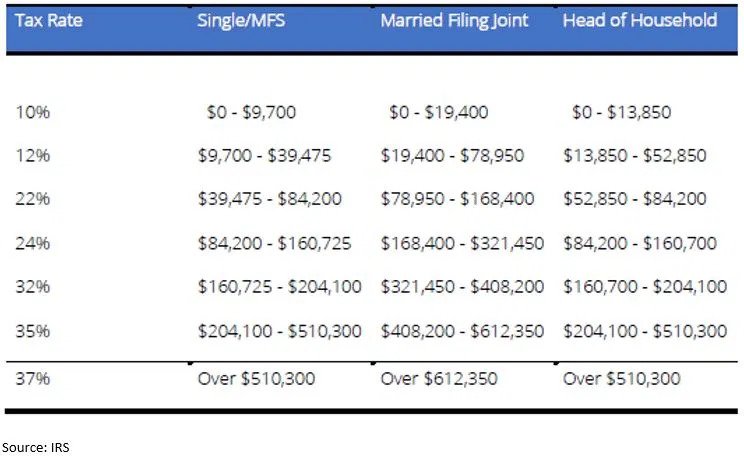
Here are your new tax brackets to be used for 2019 tax season.

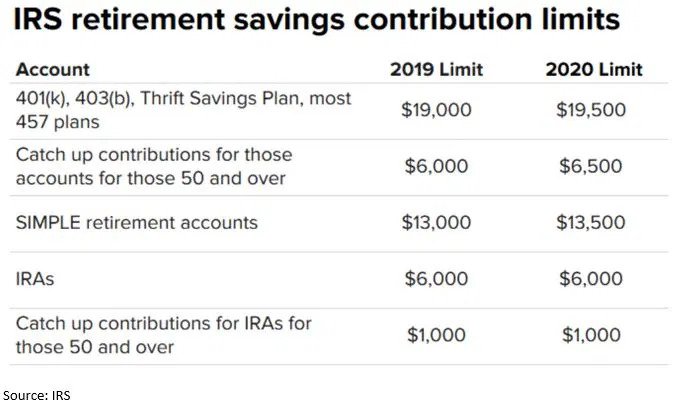
The contribution limit for traditional and Roth individual retirement accounts is $6,000, plus another $1,000 for savers 50 and over. The IRS limits high-income earners’ ability to make direct contributions to Roth IRAs — accounts in which you can save after-tax dollars, have the money grow tax-free and use it in retirement free of taxes. For high earners, there are ways however to convert traditional IRAs to Roth by making a non-deductible contribution to traditional IRAs; a.k.a. back door Roth conversion. The math gets complicated if you do a partial conversion to Roth. Please contact us to determine if backdoor Roth conversion is beneficial to you.

Health savings opportunities

As of 2020, the IRS increased the contribution limit for the health savings account (HSA). These accounts allow you to make tax-deductible contributions to HSA accounts and have the money grow free of taxes. The funds can be withdrawn tax-free to cover qualified health expenses. This year, you can save up to $3,550 for individuals with self-only health coverage. That’s up from $3,500 in 2019. Account holders with family plans can save up to $7,100 in this account, up from $7,000 in 2019. Individuals over 55 years of age can add $1,000/year as a catch-up provision. HSAs differ from health-care flexible spending accounts primarily in that you can roll over the HSA balance from one year to the next. The money in FSAs generally must be used by the end of the plan year or you lose it. IRS relaxed the rule a bit, and now you can roll over up to $500 in unused funds in the following plan year. The IRS also increased the contribution limits to health-care FSA to $2,750 in 2020, up from $2,700 in 2019.

Gift and estate tax savings

The Tax Cuts and Jobs Act nearly doubled the amount that decedents can bequeath in death — or gift over their lifetime — and shield it from federal estate and gift taxes, which are 40%. For 2020, the lifetime gift and estate tax exemption was increased again. In 2020, the lifetime exemption is $11.58 million per individual, up from $11.4 million in 2019. Finally, the annual gift exclusion, the amount you can give to any other person without it counting against your lifetime exemption, remains unchanged at $15,000 for 2020.

Child tax credit

The child tax credit for children 16 and under is $2,000/child. The income threshold for married filing jointly is now $400,000 adjusted gross income (AGI) ($200,000 AGI for Individual filers). Older children & other dependents now qualify for a $500/dependent credit. Even if tax is at zero, $1,400 of each $2,000 credit is refundable.

II. THE BAD

These are the more familiar deductions which went away. Some of them will be missed.

  • Personal Exemptions (reduced to zero)
  • Casualty & Theft Losses (except federally declared disasters)
  • Miscellaneous & Unreimbursed Employee Business Expenses
  • ROTH Recharacterizations are now irreversible
  • Kiddie Tax going from parent’s rate to Trusts rate, which is much higher.
  • Moving Expenses (except active military)
  • Home Equity Loan Interest is no longer deductible (unless for home improvement)
  • College donations to purchase athletic tickets are no longer deductible
  • Business Entertainment and country club dues (it appears business meals are okay)
  • Alimony beginning on or after January 1, 2019 is no longer Income to the recipient or a Deduction to the payor
  • The Affordable Care Act (ACA) Individual Mandate and the penalty is repealed in 2019
  • $2 million exclusion on cancellation of debt for mortgage on residence (expired 2017)
  • Mortgage Insurance Premium Deduction on Itemized Deductions (expired 2017)

III. THE UGLY

Identity theft protective measures

The Service and many states have come up with some helpful measures to protect taxpayer identity. The requirement for Drivers License information is mandatory for many states. The W-2 form only requires the “last 4 numbers” of the taxpayer’s SSN, not the entire number. If your address was changed along with your direct deposit bank information from the previous year, IRS now sends a letter to your prior address asking if you have or have not filed a tax return from this new address. If it’s being done by an identity thief, you simply check “No” and Fax it back to the IRS to suspend processing of the false return. Outsourced tax preparation?! Some accounting firms (mostly large ones) outsource the preparation of your tax return to subcontractors outside United States. In order to share that information such as social security number, date of birth information, and other sensitive information, the taxpayers have to consent to such disclosure. Client Disclosure and Consent. The IRS has recently added provisions to the Tax Code designed to provide added safeguards regarding the transfer and use of your personal tax return information.

How Zagmout & Company CPAs Can Help

Zagmout & Company CPAs helps taxpayers interpret new filing rules, identify provisions relevant to their circumstances, and address compliance risks before they become expensive problems.

SCHEDULE YOUR FREE CONSULTATION

Disclaimer: This article is for general informational purposes only and does not constitute accounting, tax, legal, financial, or investment advice. The application of these matters depends on individual circumstances and should be evaluated with qualified professional advisers.